SEO Basics: A Beginner's Guide to Search Engine Optimization
Want your website to rank higher on Google? This beginner-friendly guide covers everything you need to know about SEO fundamentals.
What is SEO?
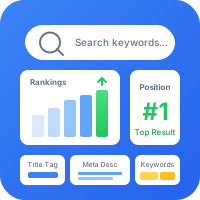
Search Engine Optimization (SEO) is the practice of improving your website to increase its visibility in search engine results. When people search for products, services, or information related to your business, SEO helps your website appear higher in those results.
Why SEO Matters
- 93% of online experiences begin with a search engine
- 75% of users never scroll past the first page of results
- Organic search drives 53% of all website traffic
- SEO leads have a 14.6% close rate (vs. 1.7% for outbound leads)
How Search Engines Work
1. Crawling
Search engines use "crawlers" or "spiders" to discover pages on the web. They follow links from page to page, building a map of the internet.
2. Indexing
After crawling, search engines analyze the content and store it in their index,a massive database of web pages.
3. Ranking
When someone searches, the search engine pulls relevant pages from its index and ranks them based on hundreds of factors.
The Three Pillars of SEO
Technical SEO
Making your site easy for search engines to crawl and index:
- Fast loading speed
- Mobile-friendly design
- Secure connection (HTTPS)
- Clean URL structure
- XML sitemap
- Robots.txt file
On-Page SEO
Optimizing individual pages for specific keywords:
- Title tags and meta descriptions
- Header structure (H1, H2, H3)
- Quality content
- Keyword optimization
- Image alt text
- Internal linking
Off-Page SEO
Building authority through external signals:
- Backlinks from other websites
- Social media presence
- Brand mentions
- Local citations (for local businesses)
Keyword Research Fundamentals
Understanding Search Intent
Every search has an intent behind it:
- Informational: "how to compress images"
- Navigational: "toolpop image compressor"
- Transactional: "buy image editing software"
- Commercial: "best image compression tools"
Finding Keywords
Free tools:
- Google Keyword Planner
- Google Search Console
- Google Trends
- Answer The Public
- Search volume (how many searches per month)
- Keyword difficulty (how hard to rank)
- Relevance (how well it matches your content)
Long-Tail Keywords
Long-tail keywords are longer, more specific phrases:
- Head term: "image compression" (high volume, high competition)
- Long-tail: "how to compress images for email" (lower volume, easier to rank)
On-Page SEO Best Practices
Title Tags
The title tag appears in search results and browser tabs.
Best practices:
- Include your primary keyword
- Keep under 60 characters
- Make it compelling to click
- Put important words first
- Unique for each page
Meta Descriptions
The description appears below the title in search results.
Best practices:
- Include primary and secondary keywords
- Keep under 160 characters
- Include a call-to-action
- Summarize the page content
- Unique for each page
Header Structure
Use headers to organize your content hierarchically:
<h1>Main Page Title (one per page)</h1>
  <h2>Major Section</h2>
    <h3>Subsection</h3>
    <h3>Subsection</h3>
  <h2>Major Section</h2>
    <h3>Subsection</h3>
Content Optimization
Quality signals:
- Comprehensive coverage of the topic
- Original research or insights
- Regular updates
- Good grammar and spelling
- Proper formatting (lists, paragraphs, images)
- Include primary keyword in first 100 words
- Use naturally throughout content
- Include related terms and synonyms
- Don't keyword stuff (overuse keywords)
Image Optimization
Images affect both user experience and SEO:
- Use descriptive file names:
image-compression-before-after.jpg - Add alt text describing the image
- Compress images for fast loading
- Use modern formats (WebP)
- Include images that add value
Technical SEO Essentials
Page Speed
Google considers page speed a ranking factor.
Quick wins:
- Compress images
- Enable browser caching
- Minimize CSS and JavaScript
- Use a CDN
- Choose good hosting
Mobile-Friendliness
Google uses mobile-first indexing, meaning it primarily uses your mobile site for ranking.
Requirements:
- Responsive design
- Readable text without zooming
- Tappable buttons and links
- No horizontal scrolling
- Fast mobile loading
HTTPS Security
HTTPS is a ranking signal. All sites should use it.
- Get an SSL certificate (often free with hosting)
- Redirect HTTP to HTTPS
- Update internal links
- Update sitemap and canonical tags
URL Structure
Good URLs help users and search engines understand your pages:
✅ /blog/seo-basics-guide
❌ /blog/post?id=12345&cat=7
Best practices:
- Use words, not numbers
- Include keywords
- Keep them short
- Use hyphens, not underscores
- Lowercase only
Link Building Basics
Why Links Matter
Links from other websites are like votes of confidence. More quality links = higher authority = better rankings.
Types of Links
- Natural links: Earned because of great content
- Manual outreach: Asking others to link to you
- Self-created: Forums, comments (usually low value)
Earning Links
- Create linkable content (research, tools, guides)
- Guest post on relevant sites
- Fix broken links on other sites
- Get listed in directories
- Build relationships in your industry
Links to Avoid
- Paid links
- Link schemes
- Low-quality directories
- Irrelevant sites
- Excessive reciprocal linking
Measuring SEO Success
Key Metrics
- Organic traffic: Visitors from search engines
- Keyword rankings: Positions for target keywords
- Click-through rate (CTR): Clicks ÷ impressions
- Bounce rate: Single-page sessions
- Conversions: Goals completed from organic traffic
Essential Tools
- Google Search Console: See how Google views your site
- Google Analytics: Track traffic and behavior
- Rank tracking tools: Monitor keyword positions
Common SEO Mistakes
- ❌ Ignoring mobile users
- ❌ Slow page speed
- ❌ Duplicate content
- ❌ Keyword stuffing
- ❌ Ignoring meta tags
- ❌ No internal linking strategy
- ❌ Forgetting about user experience
- ❌ Expecting immediate results
SEO Action Checklist
Week 1: Foundation
- [ ] Set up Google Search Console
- [ ] Set up Google Analytics
- [ ] Audit current site performance
- [ ] Identify 10 target keywords
Week 2: Technical
- [ ] Check mobile-friendliness
- [ ] Test page speed
- [ ] Verify HTTPS
- [ ] Create/update XML sitemap
Week 3: On-Page
- [ ] Optimize title tags
- [ ] Write meta descriptions
- [ ] Improve header structure
- [ ] Add image alt text
Week 4: Content
- [ ] Create pillar content
- [ ] Build internal links
- [ ] Start link outreach
- [ ] Plan content calendar
Conclusion
SEO is a long-term investment that compounds over time. By understanding the fundamentals,technical SEO, on-page optimization, and link building,you can significantly improve your website's visibility in search results.
Start with the basics covered in this guide, measure your progress, and continuously improve. The websites that rank highest are those that consistently provide value to their users.
Use ToolPop's free SEO tools like our Meta Tag Generator to implement these best practices on your own site.
Try Our Free Tools
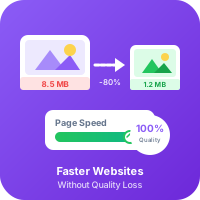
Put these tips into practice with our free online tools. No signup required.
Explore Tools